
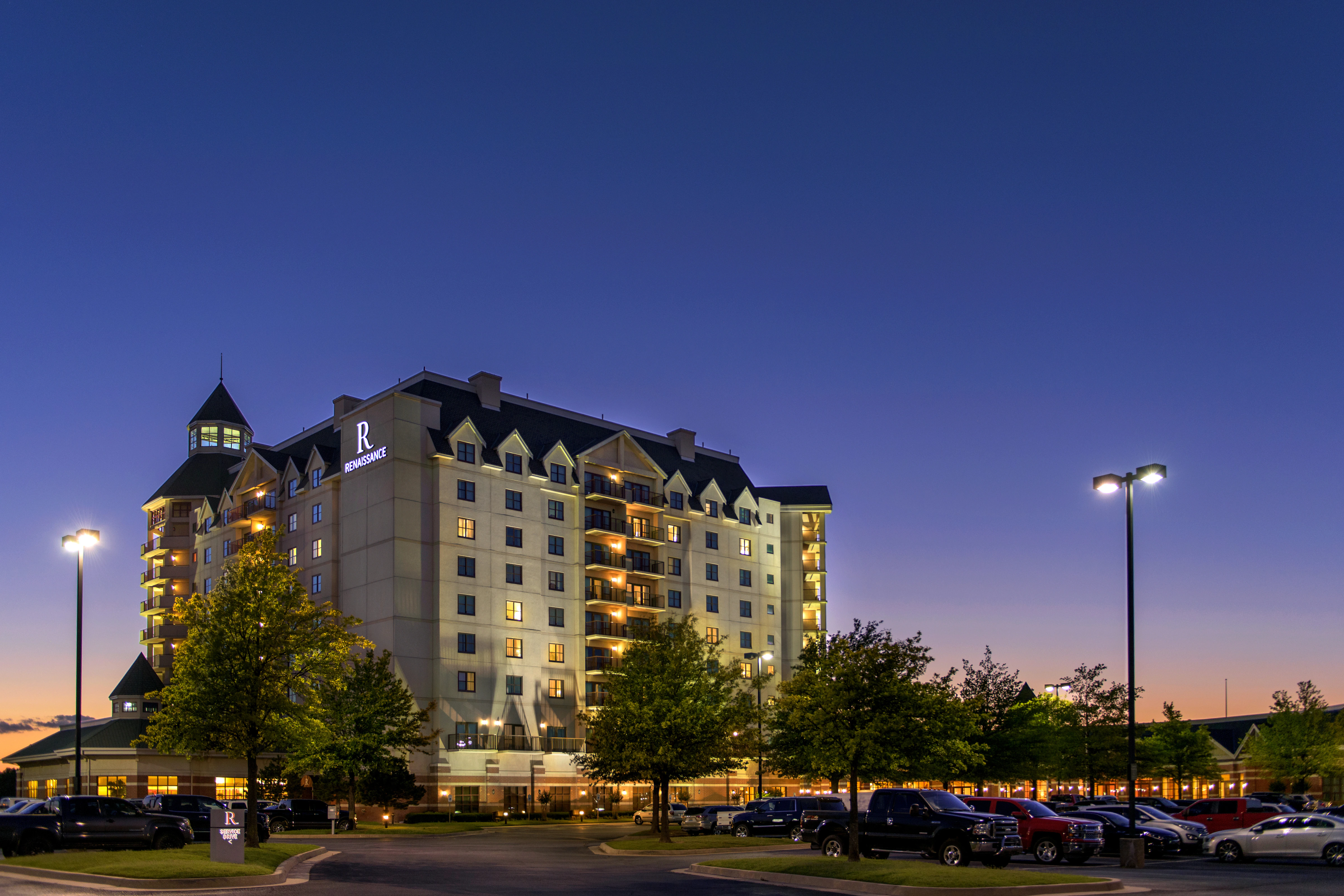
Renaissance Tulsa Hotel & Convention Center needs a venue-aware plan that keeps booth execution, labor, freight, graphics, AV, and show-site control moving on the same schedule from kickoff through strike.
Execution priorities
Renaissance Tulsa Hotel & Convention Center in Tulsa, OK becomes easier to evaluate when the venue, the booth behavior, the freight path, the labor sequence, and the commercial objective are considered together instead of as separate decisions.
A serious plan for the center should therefore cover scheduling discipline, venue approvals, installation and dismantle, graphics production, power and AV planning, storage, reuse, and show-site supervision with enough specificity that the field team knows how the room is supposed to behave before move-in begins.
The center is one useful benchmark for that conversation, but the same logic applies anywhere in and around Tulsa: the room should support the event objective, and the project plan should support the room.
The center only works when those priorities are reconciled early enough that the booth, the service mix, and the day-of schedule are not arguing with each other once freight is already moving.
About Renaissance Tulsa Hotel & Convention Center
The hotel has 14 event rooms, 50,423 square feet of total event space, and 23 breakout rooms.
The largest setup can handle 3,500 attendees and specifically highlights the Renaissance Grand Ballroom for events up to 2,220 guests.
Located at East Tulsa / South 169 Corridor.
Projects at the center start with its published floor plan, dock schedule, and service-order deadlines.
What's included in the project scope
Projects at the center typically include design work, fabrication or rental sourcing, graphics production, show-service paperwork, freight, install, show-hours coverage, and strike.
Scope boundary is as important as scope inclusion.
Operational rules on the Tulsa floor
Tulsa floor operations follow the venue's own manual.
Practical planning rules for the center in Tulsa: Utilities, rigging, AV support, catering, and event staffing are often routed through the venue's own ordering system or sales team rather than handled as open assumptions.
What drives the Tulsa calendar
Tulsa is a working trade show market.
the region reached 1,480 new business formations in 2022, the highest number in more than a decade, and leads Oklahoma in high-tech job intensity at 3.4 percent of employment, which sets the practical ceiling for a booth program working the market.
What an engagement actually looks like
After the brief, the work turns to the building itself.
Install days are owned by a single on-site lead.
Throughout show hours, the on-site lead stays present.
Strike and closeout happen the same day.
Pricing and scheduling
Every project has the same cost drivers.
Lead time drives everything. Custom: 16 to 20 weeks. Rental: 8 to 12.
Outcomes we optimize for
Most programs in Tulsa are evaluated on lead-capture volume, meetings booked on the floor, and qualified-pipeline attribution after the show. The booth is a means to those numbers — it is not the number itself.
A week after the show, the booth's actual floor performance is already clearer than any pre-show projection. We document those observations alongside the technical closeout so the next cycle inherits real signal, not nostalgia.
What makes our work different
Trade Show Services of Tulsa keeps the work local.
Consistency across show dates is the other reason to hire local. The same crew that built the booth runs the install, knows the pack-out, and catches the small things — a missing hardware pack, a graphic edge that needs reseating, a storage crate routed to the wrong bay — without needing the client team to intervene.