
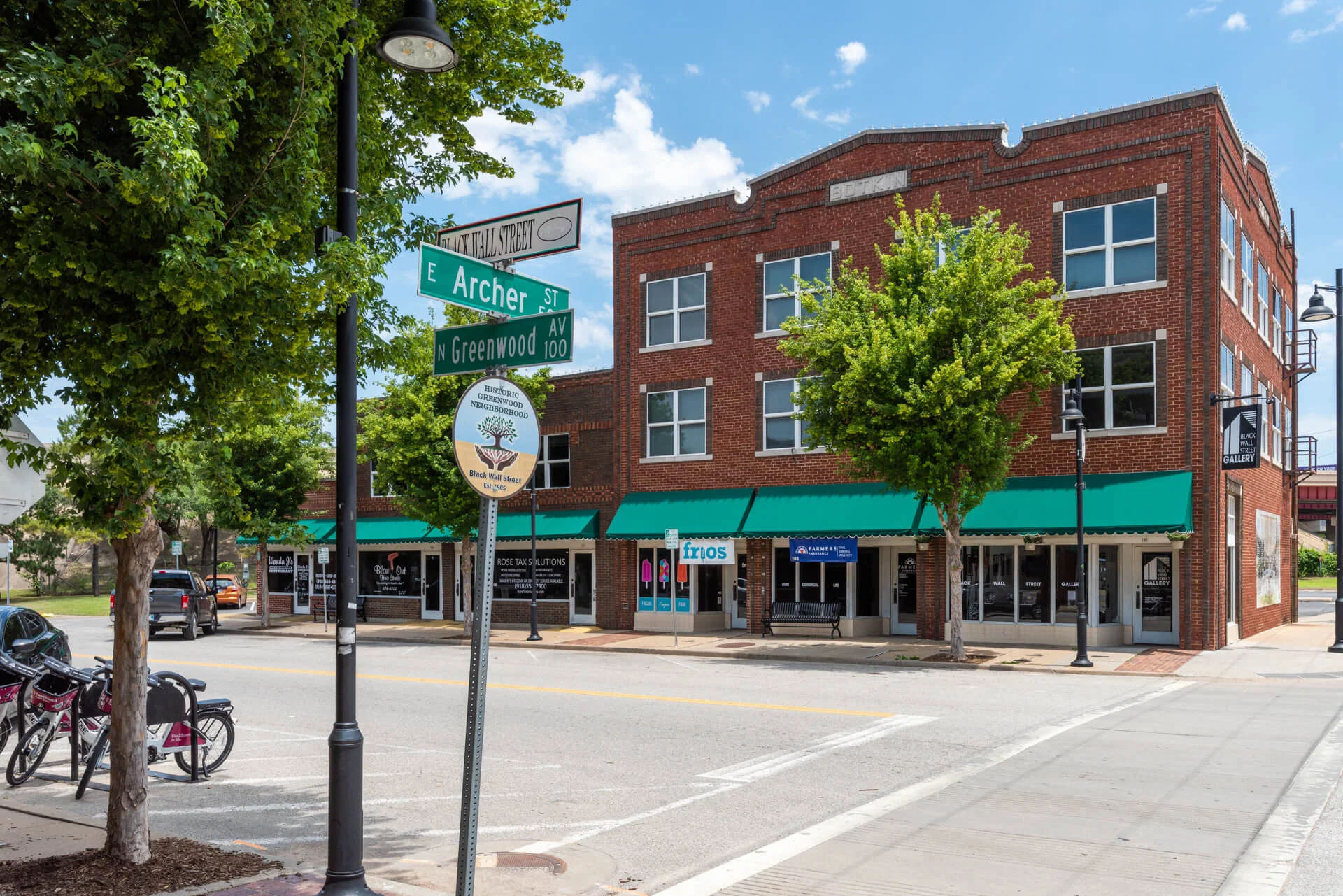
Greenwood District needs a venue-aware plan that keeps booth execution, labor, freight, graphics, AV, and show-site control moving on the same schedule from kickoff through strike.
Execution priorities
A serious plan for the district should therefore cover scheduling discipline, venue approvals, installation and dismantle, graphics production, power and AV planning, storage, reuse, and show-site supervision with enough specificity that the field team knows how the room is supposed to behave before move-in begins.
The strongest Tulsa projects also stay realistic about what the room can absorb. Some events can support a more ambitious custom build, a larger AV package, and more layered staffing. Others will perform better with a faster installation path, simpler support systems, and a footprint that is easier to supervise. The right answer depends on the venue, the audience, the budget, and the amount of pressure around move-in and strike. That is why the planning conversation needs commercial discipline as much as creative ambition.
Greenwood District — what the area looks like for events
Greenwood District is one of the Tulsa area submarkets we cover for trade show work.
Greenwood District sits in the Downtown Tulsa area.
Trade show work in the district shares most of its structure with larger Tulsa projects. Where it diverges is in the nearby venue mix, freight routing, and local hotel block availability.
How Tulsa floor operations work
Labor in Tulsa runs venue-by-venue, not citywide.
Practical planning rules for the district in Tulsa: Tulsa labor and venue services vary by building, organizer, and event format, so the current exhibitor kit and venue instructions should guide the final install and show-services plan. Utilities, rigging, AV support, catering, and event staffing are often routed through the venue's own ordering system or sales team rather than handled as open assumptions.
The buildings that host Tulsa events
BOK Center Private Events is one of the anchors.
ONEOK Field: oNEOK Field is a 7,833-seat minor league baseball stadium at 201 North Elgin Avenue in downtown Tulsa, home of the Tulsa Drillers.
The Gathering Place.
What drives the Tulsa calendar
SageNet Center alone spans 448,000 square feet with 354,000 square feet of clear-span space, giving Tulsa a second major event cluster beyond downtown hotels and the convention center, which sets the practical ceiling for a booth program working the market.
Fly Tulsa announced new Alaska Airlines nonstop service to Seattle and San Diego launching in spring 2026, expanding west-coast access for event attendees and exhibitors — a useful reference point when sizing a project.
What's included in the project scope
Projects in the district typically include design work, fabrication or rental sourcing, graphics production, show-service paperwork, freight, install, show-hours coverage, and strike.
a bad one has many, because they weren't.
Those run alongside the engagement rather than inside it.
How a project runs
After the brief, the work turns to the building itself.
With venue details locked, production runs.
One named show-site lead runs the install.
Throughout show hours, the on-site lead stays present.
What it costs and how fast it moves
Every project has the same cost drivers.
Rental programs run on 8 to 12.
How project performance gets measured
Exhibitors who measure programs seriously track leads, floor-booked meetings, and post-show pipeline. The build and the install are upstream inputs to those KPIs.
The post-show debrief is where the numbers get connected back to the physical booth. Which demo station drew traffic, which meeting area closed more conversations, which graphic zone attracted dwell time — that feedback shapes the next build rather than getting lost.
How we're built to run your project
Working with a Tulsa-based shop matters most when something goes wrong on-site. Solutions live within driving distance instead of on another coast.
Over a multi-show calendar, the compound value of a single team shows up in fewer surprises. The second install is faster than the first, the third is faster than the second, and by the fourth the project runs on memory and documentation rather than first-principles planning.