
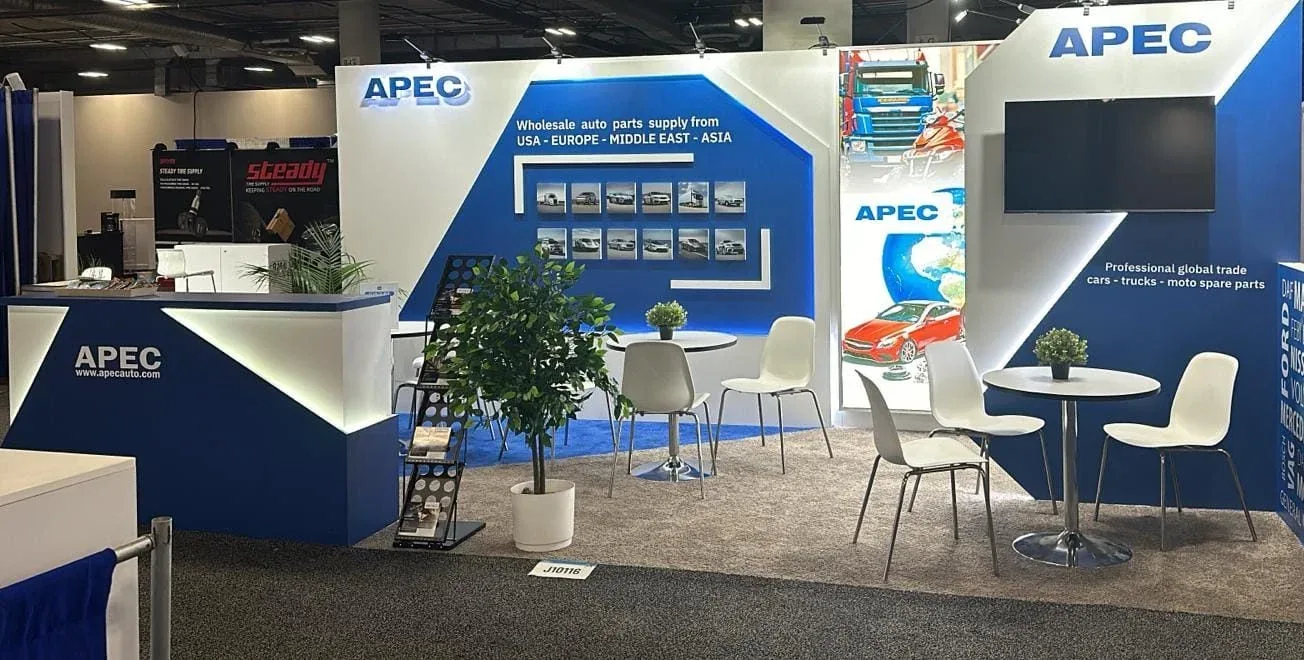
Conference and Venue Execution needs a venue-aware plan that keeps booth execution, labor, freight, graphics, AV, and show-site control moving on the same schedule from kickoff through strike.
Execution priorities
A serious plan for the execution should therefore cover scheduling discipline, venue approvals, installation and dismantle, graphics production, power and AV planning, storage, reuse, and show-site supervision with enough specificity that the field team knows how the room is supposed to behave before move-in begins.
The strongest Tulsa projects also stay realistic about what the room can absorb. Some events can support a more ambitious custom build, a larger AV package, and more layered staffing. Others will perform better with a faster installation path, simpler support systems, and a footprint that is easier to supervise. The right answer depends on the venue, the audience, the budget, and the amount of pressure around move-in and strike. That is why the planning conversation needs commercial discipline as much as creative ambition.
The Tulsa event landscape
Tulsa is a working trade show market.
Trade show weeks in Tulsa compress decisions.
Tulsa venues we work
Arvest Convention Center. The building offers more than 275,000 square feet of event space in downtown Tulsa.
DoubleTree by Hilton Tulsa Downtown is one of the anchors. The hotel offers 23,957 square feet of flexible event space and 18 meeting rooms.
What makes our work different
Trade Show Services of Tulsa keeps the work local.
The difference from a national vendor shows up at the dock.
Operational rules on the Tulsa floor
Tulsa floor operations follow the venue's own manual.
Practical planning rules for the execution in Tulsa: stagehand, rigging, AV, or catering paths, those requirements should shape the production schedule before fabrication and show services are locked.
Tulsa neighborhoods and event districts
The South River Corridor area runs through south-tulsa, riverside-corridor, jenks, bixby.
Expo Square / Midtown Event District runs across expo-square-district, midtown-tulsa, cherry-street.
Scope on a conference and venue execution project
The handoffs on a the execution project matter almost as much as the line items. Design has to hand a build-ready drawing to fabrication. Every handoff is a place quality can drop.
Scope boundary is as important as scope inclusion.
What an engagement actually looks like
Venue coordination comes next.
Install days are owned by a single on-site lead.
During show hours, the booth is a live operating space.
That document drives the next booking.
Pricing and scheduling
Cost scales with how it is built, how big it is, what the venue charges for its own services, what the graphics look like, how far the crates travel, and how many days the team stays on-site.
Lead time drives everything. Custom: 16 to 20 weeks. Rental: 8 to 12.
What a successful project looks like
Trade show ROI is measured at the lead and pipeline level.
A week after the show, the booth's actual floor performance is already clearer than any pre-show projection. We document those observations alongside the technical closeout so the next cycle inherits real signal, not nostalgia.